Top 10 Tips For Reporting And Documentation Of PAT in Warwickshire
Documentation and reports generated by Portable Appliance Testing is tangible evidence of compliance by an employee with the Electricity at Work Regulations, 1989. While the physical act of testing is crucial but it is the documentation that demonstrates due diligence to Health and Safety Executive (HSE) inspectors, insurance assessors, and auditors. If you are involved in an electrical incident, precise and comprehensive documentation is your best defence. It will prove that you have a risk-based, systematic maintenance program in place. The IET Code of Practice sets out the guidelines for ensuring adequate records. These go beyond simple passes/fails to include asset registers, certificates of conformity, and risk evaluations. Documentation is an important part of safety, not just an administrative job. It allows for the analysis of trends, aids in future risk assessments, and provides a clear audit trail, from the initial inspection to any action to correct the issue.
1. The PAT Testing Certificate – Report of Inspection & Testing in Warwickshire
It is the most crucial document that is generated from the test phase. It shouldn't be a one-page summary and should be a complete document. A certified certificate must contain information regarding the testing company and their business and the name and certification of the tester. It should also include the date, place of testing as well as a complete listing of all the appliances tested (referencing the unique ID) and the results for all tests conducted (visual examination and electronic testing) as well as a clear indication of pass or fail for each item. The certificate must be signed and date by the person in charge of the work.
2. The Asset Register: the Foundation of Documentation
The asset register is a central document which tracks the entire lifecycle of each portable appliance. The asset register must be a detailed document that contains, at minimum an ID number unique for the asset (which is the same as the tag on the portable appliance) and a description of the product and its whereabouts. The document should contain the class (Class I/II) and the kind (e.g. IT, handheld, or stationary), the manufacturer, the model as well as the serial number. A quality register should also contain a complete record of the results of tests as well as dates and remedial actions taken, providing a complete audit trail for each asset.
3. Failed appliance report and remedial action documentation in Warwickshire
The mere documentation of a fault is not enough. Documentation should track the entire lifecycle of the problem. This should include a complete failure report that explains the cause of the issue (e.g., "failed earth bond test: 1.8O"), the immediate action taken (e.g., "item labelled FAIL, taken out of service and unplugged") and a record of the authorization procedure for repair or disposal. The report must also contain the date on which the re-test was conducted, as well as the results.
4. Labels on Assets
Labels attached to appliances themselves are essential for the documentation system. Each label must be long-lasting, non-metallic, and non-conductive. It should clearly show the asset's unique ID, the date it was tested and the ID of the tester (or company's name), and the date of the next test (or re-test). The label should provide a prompt visual indication of the status of compliance for users and inspectors. The information on a label must be exactly the same as that on an asset register or a certificate.
5. Risk Assessment Documentation
It is essential to record the risk assessment prior to deciding the frequency and types of testing is required. The report should be element of all PAT documents. It should contain the results of an assessment. It also includes the kinds of equipment used, their environments, the level of competence of the users and the rationale behind choosing inspection and test intervals. This document provides a rationale of why some products that are low-risk may require a more extensive test schedule. It demonstrates a smarter, risk-based policy rather than a blanket policy that is not supported.
6. Evidence of Competence, Insurance and Certificate of Competence in Warwickshire
Documentation proving the competence of testers is required in the file. It should also contain documents that prove the validity of the certification (e.g. City & Guilds 2377) and evidence that the tester is insured for public liability. This documentation, while not directly a record of the testing process, is crucial as it validates the entire process. It proves to an enforcement authority that a dutyholder took reasonable steps to choose the right person to be a part of the process.
7. Calibration Certificates for Testing Equipment
The precision of the test relies on the authenticity of the test results. To ensure the accuracy of the results, the certificate of calibration issued by an UKAS accredited laboratory must be included in the paperwork. The certificate (typically renewed annually) confirms that the instrument's measurements could be traced back to the national standards at the time of the test.
8. Digital Reporting Systems and Online Portals
Digital management has become the accepted practice in the business world. The majority of providers offer access to a customer portal. Dutyholders have 24/7 access to their asset register that is live. They can download historical and current certificates, as well as run reports. This is a much superior system to paper-based methods which reduces losses, which makes it easier to use during audits, and giving a secure, permanent record. The accessibility of a system indicates a professional provider.
9. Long-Term Retention of Data, Security and Retention
In civil law, there is no specific statutory retention period. However, a claim for injury can be filed for up to 3 years following the date that the creation of the PAT record. Prudent practice is to retain the full documentation–including certificates, asset registers, and risk assessments–for at least the lifespan of the appliance or for a minimum of 5-7 years. The documentation needs to be secured manner, whether it is physically stored or if it's digital for the sake of data security and accessibility.
10. The importance of documentation in the purpose of auditing and enforcement in Warwickshire
Documentation is mandatory in all HSE inspections audits by insurance companies, HSE inspections, or electrical incidents. The evidence is needed to demonstrate that the duty of care been fulfilled. Incorrect, incomplete, or missing documentation can lead to enforcement action (e.g., improvement notices) and invalidated insurance claims or, in the worst scenario, even prosecution. Strong documentation isn't only about record keeping; it's also a crucial component of any legal defence strategy. Have a look at the most popular electrical equipment testing in Warwickshire for website tips.

Top 10 Tips For The Cost Transparency In Fire Extinguisher Maintenance in Warwickshire
Cost transparency is more about regulatory compliance and risk management than price comparison. In the strict regulatory framework governed by the Regulatory Reform (Fire Safety) Order 2005, opaque pricing can conceal substantial inconsistencies and lead to unanticipated liabilities. A transparent quotation serves as an outline of the services you'll receive, directly reflecting the service provider's compliance to British Standards, their operational methodology, and their dedication to ethical business practices. Hidden fees and insufficient replacement policies, as well as vague line items in quotations, are not just financial concerns. They also indicate a potential compromise of service quality. Cost transparency can help you make a sound decision that is in line with your budget and fire safety regulations. This also means that there aren't any unpleasant surprise costs.
1. Breakdown on Service Visit Costs including labour, parts and Consumables in Warwickshire
A clear quote should detail the costs for each service. The annual service should distinguish labor (the time that the engineer is on-site) from the replacement of any components and consumables. This will show that the company isn't cutting corners by reusing seals that are no longer in use or failing to recharge units properly. This makes it possible to make fair comparisons between providers as one price could exclude the crucial components and could can be misleading.
2. Pricing Model Clarity: All-Inclusive vs. Pay-As-You-Go
The quote must clearly indicate the price model that is being utilized. A Fixed-Price or All-Inclusive contract should only have one annual fee that covers every scheduled service, part as well as refills and labor. It should not be any extra charges for 5-year-old or 10-year-old services. In contrast, the Time-and Materials model or Pay As You Go will charge an initial fee that is lower initially, but will rise significantly as more services become due. Transparency is essential to avoid budget-related shocks many years into the contract and to know what the financial risk (for expensive overhauls) truly lies.
3. Extended Service (5 and 10 year) Cost Estimation
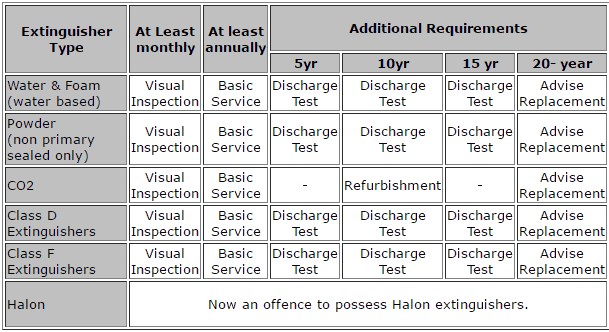
Most of the cost surprises are when you need to extend the duration of your service. A transparent service provider will not cover up these potential cost increases. They will include in their quote a detailed price list, stating the estimated cost of five years of extended services (for powder or water foam) along with 10 years of inspections and CO2 pressure test for each type of extinguisher. This allows you to estimate your costs accurately for the whole contract period and evaluate the long-term value of an all-inclusive package versus a pay-as-you-go model.
4. Equipment Replacement and Condemnation Policies in Warwickshire
Transparency is crucial in this area. The quotation should detail the policy of the service provider and any associated cost for replacement of extinguishers that are Beyond Economic Repair (BER). These include scenarios such as major damages, corrosion, or outdated models. Are you able to get a comparable for like replacement? What is the cost? What's the price? Inconsistency in this regard could suggest that the company uses equipment condemnation in order to charge excessive replacement costs, thereby holding you in a bind.
5. Additional and Hidden Fee Disclosure Call-Out, Mileage, Administrative in Warwickshire
You should carefully read the small print to find out whether there are hidden costs. The most reliable companies will list these charges upfront. The following costs are crucial to know about: Mileage costs (over a certain distance) as well as Call-Out costs for emergencies (and the costs of these charges during working hours) Administration charges (for processing documents or certificates) as well as parking/congestion charges (especially relevant in city centres). The quote may be low because these costs were not included. They will then be added later on to the invoice.
6. Quote Validation Period and Price Guarantee Conditions in Warwickshire
A professional estimate will be accompanied by a specific period of validity (normally between 30 and 90 days). This will protect you from any price increases once you've made a choice. A professional quotation should also include the terms and conditions of any price assurances, especially for long-term contracts. What is the annual cost? Will it be fixed for the contract term? Is it possible to adjust it annually according to an established index, such as CPI? Is it based on the provider's discretionary reviews each year? Transparent terms avoid disagreements and guarantee budget security.
7. Different pricing for extinguishers is based on Size and Type in Warwickshire
Servicing costs vary significantly depending on the kind and size of the extinguisher. Transparent quotes do not use only one price. It will show you the price per unit. For instance it could differentiate between an extinguisher for CO2 that weighs 2kg and wet chemical units of 6 litres. This is a fair and accurate assessment of the inventory you own and the tasks that need to be completed instead of a general estimate that could overcharge basic units.
8. Documentation and certification fees in Warwickshire
It is mandatory to present an official certification of conformity. To include the cost of preparing, issuing and maintaining this crucial document in the charge for service, it must be listed. It should not be mentioned as a line item in an unambiguous quote or added as an "admin charge" in the invoice. If a service provider charges an extra fee for the proof that the work is done correctly is a sign of caution.
9. Payment Terms and Schedule in Warwickshire
Terms for payment that are simple and fair are the mark of a reputable provider. The quote should state the frequency of invoicing (annual or quarterly) as well as the payment methods accepted by the company, as well as the terms of payment net. It is also important to know that payment must be made prior to the performance or at the time of completion. Avoid companies who require the full amount of the contract at the beginning of each year prior to when any service was completed.
10. Comparison Framework for Evaluating Competitive Quotes in Warwickshire
If you can compare like-forlike, you can finally compare with absolute transparency. This is impossible with a vague price. Companies should give you a precise, specific breakdown of the costs to manage a two-kg carbon dioxide extinguisher. This will enable you to compare the Company A's cost with that of Company B. The cost of an annual service is included, along with the estimated cost of its 10-year testing and replacement cost if the device is condemned. Without this granular detail, you are in a battle of apples and oranges and the lowest initial price will often end up being the most costly long-term partner, with potentially severe compromises on compliance and safety. Take a look at the best Warwickshire fire safety for site advice.